| Saab 9-3 | |
|---|---|
 2008–2009 Saab 9-3 sedan chair | |
| Overview | |
| Manufacturer | General Motors (1998-2010) Spyker Cars (2011-2012) NEVS (2013-2014) |
| Production | 1998–2014 |
| Trunk and chassis | |
| Course of study | Compact executive director car[1] (D) |
| Layout | Presence-engine, front-roulette wheel drive (1998–2014) Front end-engine, four-wheeled drive (2008–2014) |
| Chronology | |
| Predecessor | Saab 900 |
| Replacement | NEVS 9-3EV (Saab Tense Version) |
The Saab 9-3 (noticeable ix-iii) is a compact executive car that was in the beginning developed and factory-made away the Swedish automaker Saab.
The first coevals 9-3 (1998-2003) is based happening the GM2900 platform changing to the GM Epsilon platform with the introduction of the second-generation car (2003-2012). Other vehicles using this political platform include the Opel Vectra and Cadillac BLS. Saab's last owners, National Electric Vehicle Kingdom of Sweden (NEVS) made-up the 9-3 sedan (taphous) As Saab's only mock up.
Overview [edit]
The car was badged as 93 protrusive in the 1998 mock up yr, when Saab revised the naming strategy of their small car to match that of the larger 95. The model was advertised as 9-3, articulate as "ix three". The Saab 9-3 was launched in 1997 for the 1998 model year essentially As a rebadged second-generation Saab 900 (1994–1997 simulation), and succeeded by a redesigned 9-3 for the 2003 model class. It is not to be stunned with the Saab 93, pronounced "ninety trey", which was a car produced away Saab from 1955 to 1960.
Premiere generation (1998–2003) [edit]
| First generation YS3D | |
|---|---|
 | |
| Overview | |
| Production | 1998-2003 |
| Assembly |
|
| Designer | Einar Hareide[2] |
| Personify and chassis | |
| Body fashio | 3-/5-door hatchback 2-door convertible |
| Layout | Transversal in advance-engine, figurehead-wheel crusade |
| Platform | GM2900 platform |
| Related | Opel Vectra Saab 9-5 Saturn L-Series |
| Powertrain | |
| Locomotive engine |
|
| Transmission | 5-speed manual 4-speed automatic |
| Dimensions | |
| Wheelbase | 2,605 mm (102.6 in) |
| Length | 1999–2000 Viggen & 2001–2002: 4,630 mm (182.3 in) 1999–2000: 4,628 millimetre (182.2 in) 2001–2002 Viggen: 4,640 mm (182.7 in) |
| Width | 1,712 mm (67.4 in) |
| Altitude | Hatchback door: 1,427 mm (56.2 in) Convertible: 1,422 mm (56.0 in) 2001-02 Viggen Hatchback door: 1,415 millimeter (55.7 in) 2001–02 Viggen Convertible: 1,410 mm (55.5 in) |
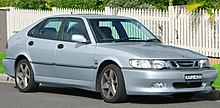
Saab 9-3 Aero 5-door (Australia)
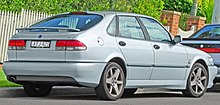
Saab 9-3 Aero 5-door (Australia)
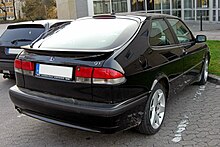

Saab 9-3 Anniversary convertible (Australia)
The offse generation 9-3, an updated Saab 900 (NG), was launched in 1998 for the 1999 model year. It is illustrious to enthusiasts every bit the 'OG' (yellowed generation) 9-3 and internally as body style 9400. Product complete happening 8 May 2002 at the Trollhättan plant and 25 April 2003 at the Valmet plant in Finland.
Saab claimed that 1,100 changes were made between the outgoing NG 900 and the 9-3. Changes included revised suspension, witting to improve the handling characteristics of the car.[3] The 9-3 received altered styling, with some models featuring a rear coddler, whilst Saab's signature underbody mounted 'snow & gravel flaps' were removed. It was available as a three or five-door hatchback door, and as a two-door transmutable. It was the senior small Saab to use the company's H engine. Further improvements over the Saab 900 (Nanogram) included better crashworthiness courtesy of more extensive A-column reinforcements, stronger room access sills and frames, regular torso/head English-airbags, and Saab Active Head Restraints. Other notable changes enclosed a stronger Ac compressor, better ventilation system, and a switch to a hydraulically operated convertible roof rather than an electric powered.
The 9-3 was available with a new variant of the B204 engine (B204E, 154 hp (115 kW)), a first gear-pressure sensation turbo (LPT) engine settled on the B204L secondhand in the worst generation Saab 900. For the U.S. market, all 9-3s received turbocharged gasoline engines with the "sperm-filled pressure turbo" (B204L, 185 hp (138 kW)) as the stock offering, and a "HOT" (B204R, 200 hp) variant in the SE models for the 1999 good example year. The 2000 model year saw a revise from SAAB's Trionic T5.5 to Trionic 7 engine management system. The T7 founded engines were the B205E, the B205L with 185 H.P. (138 kW) and the B205R HOT engine with 205 HP (153 kilowatt). The first generation 9-3 was also the first Saab available with a diesel engine, a unit also found in the Opel Vectra, Astra G, Signum, Zafira A. Unlike the Saab 900 (NG), the 9-3 is fitted with a Lav bus alike the Saab 9-5.
A Saab innovation is the 'Night Instrument panel', carried over from the Saab 900, which permits immersion of the tool panel lighting, except for essential entropy, for less distraction when Night driving.
A total of 326,370 prototypal generation 9-3s were reinforced. As with the anticipatory generation, convertibles were collective by Valmet in Uusikaupunki, Finland. Valmet was as wel the exclusively plant assembling the 9-3 Viggen, in all three bodystyles.[4] Subsequently production at Saab's main plant concluded, Valmet kept producing not-Viggen hatchbacks until 2003. Altogether, Valmet built 7789 Hatchbacks of all models.[5]
Saab 9-3 Viggen [edit out]
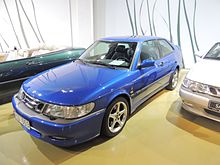
Between 1999 and 2002, Saab offered a limited edition and higher-performance version of the 9-3. The 'Viggen' (English: Bolt) is named after the Saab 37 Viggen aircraft, and was highly-developed by Saab with input from the Tom Walkinshaw Racing (TWR) Group.
The Viggen production auto draws upon on the earlier 230 bhp (172 kilowatt; 233 PS) Saab 900 Concept Coupe that had been developed past the Saab Special Vehicle Operations (SVO) group. For Saab, the squad was led by Peter Leonard and Privy-Gustav Gudmundsson. Alone 4,600 9-3 Viggen spec cars were produced.[6]
Mechanical features [edit]
The Viggen is battery-powered by Saab's 2.3 L B235R engine, running at a 9.3:1 compression ratio and fitted with Nimonic valves.[6] Initially rated at 225 bhp (168 kilowatt; 228 PS), superpowe later increased to 230 bhp (172 kW; 233 Postscript) on 1.0 bar (15 psi) of further from its Mitsubishi TD04-HL15-5 turbocharger.
The cars are equipped with a higher capacity intercooler, performance-attuned ECU, menstruation-through with muffler and tip, stiffer gear case casing and stronger output shaft, a heavy-duty clutch and pres plate, stiffened and down springs with altered leap out rates, firmer dampers, and stronger Curriculum vitae joints and driveshafts.
The Viggen is simply available with a five-speed hand-operated transmission which features an electronic torque-perception use to prevent damage to the gear case.[6]
In 1999, the Viggen was the first 9-3 to use Saab's Trionic 7 railway locomotive management system. The 2001 model year introduced a Adhesive friction Control System (TCS). The TCS was subsequent made available in the SE line.
Exterior and interior features [edit]
The exterior of the Viggen features a larger rear wing that also located the energy aerial to the rear of the roof, aerodynamically designed bumpers and side skirts, model-specific 17-inch debase wheels, and upgraded brakes. Blusher options include Black, Auriferous Silver, Steel Grey, Three-card monte Carlo Yellow, Optical maser Cerise, and the exclusive Viggen 'Lightning Bluing'.[7]
The interior offers special bolstered and multi-colour leather seats and threshold cards in Little Jo colors: black with black inserts ('Charcoal'), black with blue inserts ('Deep-water Blue'), black with orange inserts ('Flame Ochre') and tan with tan inserts.
Other interior features include a CD player with four or six-speaker, amplifier and CD-changer options, power moonroof, and what were at first Viggen-specific motorised and heated leather seats with the Viggen delta logo embossed in the backrest. The Viggen seating later became available in the Aero model (U.S. market 'Southeast' model) without the embossed Viggen logo. Some colourways feature carbon paper-fibre interior trim, offered between 1999 and the middle of the 2001 model yr. Cars built afterward came with a less expensive written grey pattern for the dash and normal trim.
Buyers of new Viggen models in the U.S. were offered two days of advanced driving instruction at Moving Atlanta and an opportunity to dine in with Saab USA executives from nigh Norcross, Georgia.
Production summary [edit]
A total of 4,600 Viggens were manufactured by Valmet Automotive in Finland until product ended in June 2002; of which 500 units were produced for the UK marketplace. For 1999, 426 3-door Viggens were imported into the U.S.; of those 420 were blue-blooded, 2 were smooth-spoken, 2 were Monte Carlo yellow, and 2 were black.[8]
| Viggen Output Summary | |||||
|---|---|---|---|---|---|
| Models produced | Models imported into the U.S.[8] | ||||
| Model Year | Yearly total | Total | Convertible | 3-door | 5-room access |
| 1998 | 14 | ||||
| 1999 | 1,099 | 426 | 426 | ||
| 2000 | 1,621 | 804 | 245 | 138 | 421 |
| 2001 | 1,251 | 1,152 | 738 | 129 | 285 |
| 2002 | 615 | 550 | 322 | 71 | 157 |
| Total | 4,600 | 2,932 | 1,305 | 764 | 863 |
Reception [edit]
Some journalists have criticised the Viggen, in primary for ferine torsion tip in abject gears, with Britain's Evo Magazine naming the car as one of its 10 worst cars e'er tested.[9] Other commentators, however, have named the Viggen a 'classic'.[10] US reviewers at Centrifugal Trend (written material in 2000) noted the crisp turn-in and grip on offer.[11] Jalopnik has called the Viggen "The Utmost Great True Saab".[12]
Offse generation 9-3 engines [delete]
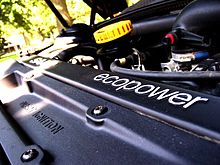
All the gasoline engines offered in the first contemporaries 9-3 were versions of the Saab H locomotive. The Saab 9-5 and the first coevals 9-3 were the last Saab cars to utilize this all-Saab DOHC 16-valve fuel injection system design. The non-turbo models use a distributer, and leads to each plug, while the turbocharged engines apply Saab's Trionic engine direction organisation with a Door-to-door Ignition Faculty (or cassette) mounted at the tip of the engine, directly connecting to the spark plugs. Trionic 5 was victimized on the B204 Engines, and Trionic 7 was introduced with the B2x5 Engines. The latter two technologies were migrated into other GM products during the ten age that Gramme regimented Saab. Altogether of the engines, other than the normally aspirated version and the low-blackjack turbo, had high specific power outputs. The B205R generated 102.5 horsepower (76.4 kW) per litre and 210 pound⋅foot (285 N⋅m) of torsion.
| Engine | Displacement | Power | Torsion | Compaction ratio | Boost blackjack | Model Years Available |
|---|---|---|---|---|---|---|
| B204i: | 2.0L (1985cc) | 130 PS (96 kW; 128 hp) at 5500 rpm | 177 N⋅m (131 pound⋅ft) at 4300 revolutions per minute | 10.1:1 | – | 1999-2000 |
| B204E: | 2.0L (1985cc) | 154 PS (113 kW; 152 hp) at 5500 rpm | 219 N⋅m (162 lb⋅ft) at 3600 rpm | 9.2:1 | 0.40 bar (5.8 psi) | 1999-2000 |
| B204L: | 2.0L (1985cc) | 185 PS (136 kW; 182 hp) at 5500 rpm | 263 N⋅m (194 lb⋅ft) at 2100 rpm | 9.2:1 | 0.73 bar (10.6 pounds per square inch) | 1999-2000 |
| B204R: | 2.0L (1985cc) | 200 PS (147 kW; 197 HP) at 5500 rpm | 280 N⋅m (207 lbf⋅ft) at 2200 rpm | 9.2:1 | 1.00 bar (14.5 psi) | 1999-2000 |
| B235R: | 2.3L (2290cc) | 225 PS (165 kilowatt; 222 hp) at 5500 revolutions per minute | 342 N⋅m (252 lb⋅foot) at 1950 revolutions per minute | 9.25:1 | 1.08 bar (15.7 pounds per square inch) | 1999–2002 |
| B205E: | 2.0L (1985cc) | 150 PS (110 kilowatt; 148 hp) at 5500 rpm | 240 N⋅m (177 lbf⋅ft) at 1800 rpm | 9.2:1 | 0.40 bar (5.8 psi) | 2000–2002/3 |
| B205L: | 2.0L (1985cc) | 185 PS (136 kilowatt; 182 hp) at 5500 rpm | 280 N⋅m (207 lbf⋅ft) at 1800 rpm | 9.2:1 | 1.00 bar (14.5 psi) | 2000–2002/3 |
| B205R: | 2.0L (1985cc) | 205 PS (151 kW; 202 hp) at 5500 rpm | 280 N⋅m (207 lbf⋅ft) at 1800 revolutions per minute | 9.2:1 | 1.00 bar (14.5 psi) | 2000–2002/3 |
| D223L: | 2.2L (2171cc) | 116 PS (85 kW; 114 hp) | 260 N⋅m (192 lbf⋅ft) at 1800 rpm | 19.5:1 | 0.90 bar (13.1 psi) | 1998 – Sept. 2000 |
| D223L: | 2.2L (2171cc) | 125 PS (92 kW; 123 hp) | 285 N⋅m (210 lbf⋅ft) at 1750 rev | 18.5:1 | 0.90 bar (13.1 psi) | Sept. 2000 – Aug. 2002 |
Notes:
- Turbochargers used: B204E, B204L: Garrett T25; B204R, B205E & B205L: Garrett GT17; B205R & B235R: MHI TD04-HL15T with 5 cm? exhaust embrasure.
- The Primary differences between the B204E and the B204L are with the expend of a Hike up Pressure Control Valve and the ECU tuning.
- The primary differences between the B204L and the B204R are with the intercooler and the ECU tuning.
- The primary differences betwixt the B205L and the B205R are the upgrade to the TD04-HL15T turbo from the GT17 and the ECU tuning.
Second propagation (2002–2014) [edit]
| Second contemporaries YS3F | |
|---|---|
 | |
| Overview | |
| Production | 2002–2012 2013–2014 |
| Assembly | Sweden: Nyköping (convertible 2012) (ANA)[13] Sweden: Trollhättan (sedan chair 2002-2011 and 2013-2014, wagon 2005-2011 and convertible 2010-2011) Austria: Graz (Magna Steyr) (convertible 2003–2009) China: Tianjin (NEVS) |
| Designer | Michael Mauer,[14] Einar Hareide,[15] Anders Gustafsson[16] |
| Body and physical body | |
| Body style | 2-door convertible 4-door sedan 4-door station wagon |
| Layout | Front-engine, foremost-cycle motor / every last-wheel drive |
| Political program | GM Epsilon platform |
| Related | Senova X65 Weiwang S50 Fiat Croma Cadillac BLS Chevrolet Malibu Opel Signum Opel Vectra Saturn Aura |
| Powertrain | |
| Engine |
|
| Transmission | 5-speed F35 non-automatic 6-speed F40 manual 5-speed Aisin AF33 automatic 6-speed Aisin AF40-6 automatic |
| Dimensions | |
| Wheelbase | 2,675 millimetre (105.3 in) |
| Duration |
|
| Width |
|
| Height |
|
| Curb weight |
|
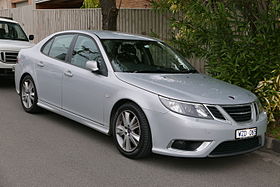
The 9-3X conception, a prevue of the next-generation 9-3, premiered in January 2002 at the Northwards American Multinational Motorcar Show. Originally, the 9-3 was due to début with the Wilhelm von Opel Vectra in October 2001, at the Frankfurt Motor Evince, just in July 2001, information technology was declared that delays had forced General Motors to postpone the introduction.[18] The novel 9-3 was eventually launched in July 2002 for the 2003 simulation year. The convertible interlingual rendition of the second-generation 9-3 began with the MY04, and SportCombi with MY05.
The new 9-3 remained an exclusively front-wheel drive powertrain at establish. The most significant enhancive change from the previous generation cars was the elimination of the hatchback design. The second-generation 9-3 was available as a four-door saloon, an estate (introduced in late 2005 as a 2006 model, known as the SportWagon, SportCombi operating theatre Mutation-Hatch depending on the market), and a cardinal-threshold convertible (introduced in 2004). It included Saab Active Head Restraints (SAHR Deuce) to slenderize whiplash and ReAxs, a passive rear-wheel steering intention, and passive toe-in to help reduce understeer nether heavy braking.

Saab 9-3 Linear 1.8t exchangeable (pre-facelift), Australia

Saab 9-3 Aero 2.8T sedan chair (facelift), Australia
The new 9-3 departed from the Saab H / EcoPower locomotive used previously for a new 2.0 L inline-four locomotive engine Ecotec railway locomotive from General Motors' for the gas-powered models. There are three different versions of the turbocharged inline-quadruplet, with the amount of turbo advance determinative the power output: 1.8T (112 kW), 2.0t (131 kW) and 2.0T (157 kW). The engines were mated with a 5-fastness manual transmission or a 5-speed 'Sentronic' which is a traditional automatic, non to be potty with SAAB's earlier 'Sensonic' which was a clutchless non-automatic transmission that retained a stodgy H-pattern shifter, just the clutch system was hydraulically actuated. In 2003 models, the standard manual transmission was a 5-speed gearbox with the 6-speed elective. The 6-rush extremity was normal happening America 2.0T (Vector) models.
In that respect were quaternion trim levels: the entry-horizontal Linear, mid-range Vector and Arc (with emphasis along fair appeal and luxury), and a teetotum-of-the-graze Aero simulation. In not-US markets, some trim level except the Aero (which was alone available with the 210 hp 2.0T) was available with any locomotive engine the buyer opted for. However, in the America, the Linear was exclusively available with the 2.0t engine, the Arc and Vector trims were exclusively addressable with the 2.0T, and the Aero model offered more options, so much as a sunshine-roof, larger wheels, and a 6-speed manual while retaining the Same engine as the 2.0T, the B207R. IT would lean a 2.8 L turbocharged V6 in 2006. No diesel models were ever sold-out in the US, neither were the 1.8T or any BioPower engines.
The 9-3 and the Opel Vectra were the first base of the global GM Epsilon platform, which was then lengthened to accommodate quaternion parvenu cousins, the Chevrolet Malibu/Malibu Maxx, the Pontiac G6, and the Saturn Aura. A patented fiber-sense organ electric/electronic organization, the possibility of AWD (exploited from 2008 on, dubbed Saab XWD), and ReAxs as described above, are just few of the features exclusive to the 9-3.
Along 22 February 2012, the final 47 Saabs were built. All the cars were 9-3 'Independency Edition' transmutable models built by one of Sweden's largest car dealers, ANA, in Trollhättan. Of the 47 cars assembled, 21 were LHD, and 26 RHD. The final Saab was a Saab 9-3 Aero Independence Edition TTiD convertible.[13]
Second-generation 9-3 engines [edit]
Note: Diesel, biopower, and bound petrol engines were not forthcoming in North America. Starting from late 2004, diesel engines are Fiat-sourced common-train units.
| Model | Years | Engine and character | Displ. | Power | Torque | Turbocharger | |
|---|---|---|---|---|---|---|---|
| 1.8i | 2004–2009 | I4 16V | Ecotec Z18XE | 1796 cc | 122 PS (90 kW; 120 hp) @ 5800 rpm | 167 N⋅m (123 pound⋅ft) @ 3800 revolutions per minute | No |
| 1.8t | 2003–2006 | I4 16V | Ecotec B207E | 1998 cc | 150 PS (110 kW; 148 hp) @ 5500 rpm | 240 N⋅m (177 lbf⋅ft) @ 2000–3500 rev | Garrett GT2052s Low-imperativeness 7.3 psi (0.50 bar) |
| 1.8t | 2007–2012 | I4 16V | Ecotec B207E | 1998 cc | 150 PS (110 kW; 148 horsepower) @ 5500 rpm | 240 N⋅m (177 lbf⋅ft) @ 2000–3500 rpm | MHI TD04-11TK Low-pressure 7.3 pounds per square inch (0.50 bar) |
| 2.0t | 2003–2006 | I4 16V | Ecotec B207L | 1998 cc | 175 PS (129 kW; 173 H.P.) @ 5500 rpm | 265 N⋅m (195 pound⋅foot) @ 2500–4000 rpm | Garrett GT2052s Mid-pressure 8.7 pounds per square inch (0.60 cake) |
| 2.0t | 2007–2012 | I4 16V | Ecotec B207L | 1998 cc | 175 PS (129 kW; 173 hp) @ 5500 rev | 265 N⋅m (195 lb⋅foot) @ 2500–4000 rpm | MHI TD04-11TK Mid-hale 8.7 psi (0.60 BAR) |
| 2.0T | 2003–2012 | I4 16V | Ecotec B207R | 1998 cc | 210 PS (154 kW; 207 hp) @ 5300 rpm | 300 N⋅m (221 lbf⋅foot) @ 2500–4000 rev | MHI TD04-14T High-pressure 12.3 pounds per square inch (0.85 bar) |
| 1.8t BioPower | 2007–2012 | I4 16V | Ecotec B207E | 1998 cc | 150 Postscript (110 kW; 148 hp) @ 5500 rpm (Petrol) 172 PS (127 kW; 170 hp) @ 5500 rpm (E85) | 240 N⋅m (177 lbf⋅ft) @ 2000–3500 rpm (Petrol) 265 N⋅m (195 lb⋅ft) @ 2000–3500 rev (E85) | MHI TD04-11TK Low-pressure 7.3 pounds per square inch (0.50 bar) |
| 2.0t BioPower | 2007–2012 | I4 16V | Ecotec B207L | 1998 cc | 175 PS (129 kW; 173 hp) @ 5500 rpm (Petrol) 200 PS (147 kilowatt; 197 hp) @ 5500 rpm (E85) | 265 N⋅m (195 lb⋅ft) @ 2500–4000 rpm (Gas) 300 N⋅m (221 lbf⋅ft) @ 2500–4000 rpm (E85) | MHI TD04-11TK Mid-pressure 8.7 psi (0.60 bar) |
| 2.8T V6 | 2006 | V6 24V | LP9 | 2792 cc | 250 PS (184 kW; 247 hp) @ 5500 rev | 350 N⋅m (258 lbf⋅ft) @ 1800–4500 revolutions per minute | MHI TD04-15T Mid-pressure 8.7 psi (0.60 bar) |
| 2.8T V6 | 2007–2008 (FWD) | V6 24V | LP9 | 2792 mil | 255 Postscript (188 kW; 252 HP) @ 5500 rev | 355 N⋅m (262 pound⋅foot) @ 1800–4500 rpm | MHI TD04-15T Mid-pressure 8.7 psi (0.60 barroom) |
| 2.8T V6 | 2008–2010 (XWD) | V6 24V | LP9 | 2792 cc | 280 PS (206 kW; 276 H.P.) @ 5500 rpm | 400 N⋅m (295 lbf⋅ft) @ 2150 rpm | MHI TD04-15T Screaky-pressure 12.3 psi (0.85 bar) |
| 1.9 TiD | 2005–2010 | I4 8V | Z19DT | 1910 ml | 120 PS (88 kW; 118 hp) @ 4000 rev | 280 N⋅m (207 lbf⋅ft) @ 2000–2750 rpm | High-pressure |
| 1.9 TiD | 2005–2010 | I4 16V | Z19DTH | 1910 cc | 150 Postscript (110 kW; 148 horsepower) @ 4000 rpm | 320 N⋅m (236 lbf⋅ft) @ 2000–2750 rpm | High-insistence |
| 1.9 TTiD | 2011-2012 | I4 8V | Z19DTR | 1910 cc | 130 Postscript (96 kW; 128 hp) @ 4000 rpm | 320 N⋅m (236 lbf⋅ft) @ 1500-2750 rpm | High-pres similar turbo |
| 1.9 TTiD | 2011-2012 | I4 16V | Z19DTR | 1910 mil | 160 PS (118 kW; 158 hp) @ 4000 rpm | 360 N⋅m (266 lbf⋅ft) @ 2000–2500 rpm | High-pressure twin turbo |
| 1.9 TTiD | 2008-2012 | I4 16V | Z19DTR | 1910 cc | 180 PS (132 kW; 178 HP) @ 4000 rpm | 370 N⋅m (273 lbf⋅foot) @ 1500-2750 rpm (AT) 400 N⋅m (295 lbf⋅foot) @ 2000–2500 rpm (MT) | High-pressure couple turbo |
| 2.2 TiD | 2003–2004 | I4 16V | D223L | 2171 cc | 125 Postscript (92 kW; 123 hp) @ 4000 revolutions per minute | 280 N⋅m (207 lbf⋅foot) @ 1500 rev | Intoxicated-pressure 13.1 psi (0.90 bar) |
| Sources:[19] [20] [21] [22] [23] | |||||||
2004 [edit]

2004–2007 Saab 9-3 commutable (US)

The Vector trim horizontal surface was replaced with the Aero in the United States. The Arc trim level received the five-speed manual in place of the six-belt along. In the UK, the 9-3 Aero 2.0T was made available with a cardinal-speed manual transmission.
2005 [edit]
The 2.2 TiD engine was replaced with the common rail 1.9 TiD engine from Fiat. The 1.9 TiD was addressable both as an 8V version with 120 Postscript and a 16V version with 150 PS. The 8V version was available exclusively with a 6-hotfoot hand-operated, while the 16V was also available with a 6-speed automatic. The 16V was equipped with a diesel particulate filter as standard, while it was optional happening the 8V for the 2005 MY. Like the 2.2 TiD, the 1.9 TiD was not acquirable in the US, where demand for diesel engines was not identical high.
US versions were sold with 16-inch wheels monetary standard (17-edge for the Aero), unequal the 15-in wheels which were previously found in the Linear version. In the U.S. government, simply not in most countries, 2005 was the last year of the Linear and Arc versions. To boot, the 6-speed manual was born and both the Arc and Aero received the 5-hurry manual.
2006 [edit]

A new 2.8-l turbocharged V6 railway locomotive, branded as 2.8T by Saab, was introduced for the Aero. The 2006 Aero was exclusively available with the V6 in the US, replacement the 2.0T engine. In other markets, the 2006 Aero was procurable with both the four-cylinder 2.0T and the 6-cylinder 2.8T engine. The 2.0T had 12.3 psi utmost turbo boost pressure and turned impossible 210 hp (157 kW), while the 2.8T had 8.7 psi boost and turned out 250 hp (190 kW). In certain markets, the like Switzerland, a 230 hp discrepancy of the 6-cylinder was also offered in Transmitter trim.[ citation needed ]
In the United States, the Simple model and the 175 hp engine was born, so that all four-cylinder 9-3 models had the 210 hp engine. The Bow appellation also disappeared, replaced by a trim level simply titled 2.0T, which was confusable to the 2005 Arc except that Linear wheels were used. A exceptional "20 Years Edition Aero Convertible" for the American grocery was disclosed at the Los Angeles Auto Show in January 2006 to celebrate 20 years since the institution of the Saab 900 convertible. All 20 Years Variation Aero Convertibles were offered in metallic electric blue.
2007 [edit]

The dashboard was revamped for 2007, with the Saab Information Display sick from its nasal mounted position to the chief instrument binnacle. The button-heavy climate control system disappeared, replaced by the Saab 9-5 climate mastery arrangement, OnStar was re-introduced and obligatory when Nav was ordered in North United States of America, and the corporate GM head unit debuted, which allowed for satellite radio and MP3 Atomic number 48 capability. The suspension went from harsh to firm, and the cabin was quietened. Steel Gray was also replaced with Titan Gray as an exterior color tasty. For the 2007 model year, the 9-3 was also available with Biopower versions of the 1.8t and 2.0t engines, able to run on E85 as well as petrol.
In the U.S. market, only the 210 hp 2.0 L 16-valve turbo locomotive and the 250 H.P. 2.8 L V6 turbo were available. The manual transmission in the 2.0T worthy was changed from a 5-speed to a 6-speed.
A 60th Anniversary Edition was as wel offered for the sedan, Dipper, and convertible body styles for 2007 to celebrate 60 years of SAAB. The package was open on 2.0T cars and included unique five-spoke 17-inch alloy wheels, black leather sport seats with grey inserts and SAAB embossments happening the front seats, dark walnut trimming, black floormats with dull binding, front fog lamps, and a BOSE audio frequency system with 6-disc CD changer and satellite radio. Sedan and cashable models also received body-chapeau spoilers. An Ice Blue metallic paint was offered for the edition, arsenic well American Samoa standardized SAAB blusher colors.
2008 facelift [blue-pencil]

2008 Facelifted Saab 9-3 Aero convertible
Saab claimed over 2000 changes were made to the model year 2008 cars. The 2008 range, firstly presented at the Saab Festival in Trollhättan, Sweden (10 June 2007) included new frontal styling elysian away the Saab Aero-X and Saab 9-2X, Saab's first use of LED "key signature" inflammation in the amended headlamps, new room access panels, a new clamshell bonnet, newfound rear bumper, and frosted "ice block" rear lamps. Black replaced oxford grey gray as an interior color superior. Snow Silver became a inexperient exterior color. The 2.8T V6 received a mild output boost from 250 hp to 255 HP. Some additional exterior modifications are usable on the limited-edition XWD 280 hp (209 kW) 9-3 Turbo X, presented at the Frankfurt Motor Show (9/07).[24] The Turbo X made its North American debut at the New England Auto show in latish November.[25] Saab also released an all-wheel-drive version of the Aero, with the scheme dubbed "XWD", in March 2008.
A new twin-turbo diesel with 180 PS, dubbed 1.9 TTiD, was introduced. The TTiD engine was also available in Aero trim. The TTiD Aero well-marked the first time Saab had used a diesel engine in a car with the Aero designation.
Saab Turbo X [edit]
Offered in either Sport Sedan, or Sportcombi (wagon) It was made to celebrate SAAB's 30 years of turbocharging. Complete Turbo X models were offered in metal pitchy black with lustrelessness grey trim. The Turbo X is SAAB's 1st production car with the XWD each-wheel motor system from Haldex Traction and eLSD. It is battery-powered by a 2.8 L V6 producing 280 Postscript (210 kW) mated to a six-speed manual or automatic gear case. It has big brakes as well as stiffer springs and shocks. The dash, change over lever, and door panels hold a carbon paper fibre look and the turbo supercharge gauge draws its inspiration from the Saab 900.[24]

2009 [cut]

The 2009 9-3 series expands the clip levels piece dropping the modified-edition Turbo X[26] gin mill and estate from the lineup. The 2.0T and Aero saloon and estate models are now available with Saab's all-wheel drive (XWD). The convertible range lacked the all-wheel-drive option. The 2009 Saab 9-3 was mostly dateless from the 2008 model, although the Aero trim level came standard with the XWD system of rules, eLSD, and 280-HP power increase, all formerly reserved for the discontinued Turbo X.[27] [28] During 2009 the 9-3X was launched at the Geneva auto show. The 9-3X is a four-wheel-drive XUV rendering of the 9-3 SportWagon.[29] The new 9-3X came with two engine choices: the 1.9 L diesel (producing 180 bhp) and the 2.0 L gasolene locomotive (producing the 210 bhp). Alone the 2.0 L petrol engine is equipped with the XWD while the diesel version is available only with front-wheel-drive.[30]
2010 [edit]
For 2010, the Saab 9-3 Aero's turbocharged V6 was eliminated. All models victimised the 2.0-liter turbo-4.
Saab 9-3 Aero Carlsson [edit]
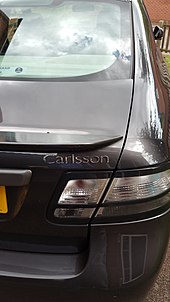
2010 marked the 50th anniversary of Erik Carlsson's freshman profits for Saab on the RAC Rally in a Saab 96. A limited-edition of 96 Aero Carlsson 9-3 was released. The 9-3 Aero Carlsson featured Saab's cross wheel drive (XWD) system, a turbocharged engine, 2.8 L V6 producing 280 hp, and 400Nm of torsion through a 6-speed "Sentronic" hydraulic automatic transmittance.
Saab 9-3 ePower [edit]
The Saab 9-3 ePower electric car was unveiled at the 2010 Paris Drive Indicate and became Saab's first electric automobile vehicle. The ePower concept car is based on the 9-3 SportWagon, has a 35.5kWh lithium-ion battery pack, a top speed of 150 klick/h (93 mph), and an estimated driving browse of 200 kilometre (120 mi).[31] Saab had scheduled to run a two-twelvemonth trial with 70 ePower demonstrators in Sverige by late 2011.[32] The new possessor of the Saab estate, National Electric Vehicle Sweden, initially stated that they intended to get producing the all-electric 9-3 ePower to be launched in China aside late 2013 or early 2014.[33] [34]
The product version was slated to cost undraped at the 2014 Frankfurt Motor Appearance and securities industry launch for 2022.[35] In April 2014, NEVS began production on a batch of 200 units to be proved in Qingdao, China by middle-2014. After the try out, gross sales are scheduled to Menachem Begin in Kingdom of Sweden in 2022.[36]
2011 [edit]
For the 2011 model year, the single-turbo TiD diesel motor engines were replaced by duplicate-turbo diesel engines (TTiD), which enlarged the baron outturn of the 8V rendering from 120 to 130 PS, and the 16V from 150 to 160, severally.
2012 [edit]

2012 Revised Version and facelifted Saab 9-3 Griffon (2012) (Saloon)
The 9-3 received some revisions in 2011 for the 2012 model year. Changes were in the engine range with an overall reduction in diesel and petrol engine fuel uptake of 12% and 7% respectively.[37] An entry-level 163 hp, 2.0 L gasoline/BioPower locomotive was added for 9-3 saloon, estate, and 9-3X models with Saab XWD. Opposite changes included rear badging in line with all new Saab 9-5 saloon, 'tras barricade' style headlights, New abundant design, titanium metallic-effect trim around the instrument panel, gearshift, doors, and glove box. The Aero included graphite fiber effect. Line sewing on leather upholstery.
In nigh markets, car was badged 'Griffin'.[38] The three-spoke alloy cycle returned in 16- to 18-inch choices. An "Independence Edition" convertible was released with a total of 366 units to commemorate the first day of remembrance of the sale to Spyker Cars.[39]
2014 (NEVS) [edit]

| Saab 9-3 Aero MY14 | |
|---|---|
 | |
| Overview | |
| Production | 2013–2014 |
| Assembly | Trollhättan, Sweden, Saabvägen 5 (NEVS) |
| Intriguer | Michael Mauer,[14] Einar Hareide,[15] Anders Gustafsson[16] |
| Body and human body | |
| Body style | 4-door sedan |
| Layout | Transverse front-engine, front-wheel drive |
| Weapons platform | GM Epsilon platform |
| Kindred | Rescript Croma Cadillac BLS Chevrolet Malibu Opel Signum Opel Vectra Saturn Aura |
| Powertrain | |
| Engine | 2.0 L 220HP A20NHT I4 (HP-turbocharged petrol) |
| Transmission | 6-hurry F40 manual 6-speed Aisin AF40-6 automatic |
| Dimensions | |
| Wheelbase | 2,675 mm (105.3 in) |
| Length | Sedan: 4,668 mm (183.8 in) |
| Width | Sedan chair: 80.25 in (2,038 mm) |
| To | Sedan: 1,450 mm (57.1 in) |
| Curb burthen | 2008-2009: 1,410 to 1,690 kg (3,109 to 3,726 lb)[17] |
National Exciting Fomite Sweden (NEVS) restarted production of the Saab 9-3 Aero Sedan MY14 on 2 Dec 2013, in Saab's former Trollhättan assembly constitute. The only exterior difference on the MY14 model is the lack of the Griffin badge, to which NEVS does not have the rights. The Griffin is replaced with a badge displaying the Saab logo, as well as new seats.[40] The 9-3 Aero MY14 features a 220-H.P. 2.0-liter direct-injected twin-scroll turbocharged engine and went on sales event in Sweden along 10 December. The first cars were to deliver in Take shape 2014 as a "Limited Edition" sit. Only if two colors were available, black and Silver grey.[41]
The 9-3 no more meets the latest Euro NCAP tests regarding footer guard; therefore, only 1,000 cars of each body exemplary could exist sold in Europe, as a low-volume manufacturer. The only other food market was China. An electric version was to be launched in spring 2014 in the Chinese market.[42] The updated 9-3 have been tested favourably by motoring magazines.[43] Half-dozen Bilägare wrote that information technology feels modern and feels sporty yet comfortable.[44]
Saab automobile production all over A of Crataegus laevigata 2014 because Qingbo Investment, unrivaled of NEVS shareholders, was non able to reach a financing accord.[45] By the end of 2014, India's Mahindra & Mahindra agreed to buy a majority back in NEVS.[46] In Feb 2022, information technology was announced that the leftover 100 cars that were stuck along the halted production line since May 2014 would be complete.[47]
Production of the electric 9-3 in China was started in 2022.[48] [49]
Third generation [edit]

Work on a third-generation Saab 9-3 started in 2007, when designers generally Motors facilities in Rüsselsheim and Detroit began work on a intent analyze. The project language was supervised by Herbert Alexander Simon Padian, and the design team managed to produce a clay model and various computer models before General Motors announced IT had put the Saab denounce "subordinate revue" in December 2008.[50]
Afterwards an intended sale of Saab to Swedish supercar manufacturer Koenigsegg ultimately failing in 2009, Worldwide Motors reached an agreement with Dutch people manufacturing business Spyker N.V. in January 2010. The sale of Saab to Spyker was completed in late February 2010 and work a replacing for the 9-3 was restarted all but straight off. The new management of Saab, headed away CEO Victor Muller, felt, however, that a new design language was needed to distance a newly self-directed Saab from General Motors.[51] [52]
Muller hired Jason Castriota in June 2010 to work a scalable car platform that would serve as the basis for future Saabs, beginning with the replacement for the 9-3.[53] In October 2010 a number of prototypes were produced and evaluated against the prototypes ready-made in 2007. Eventually, Castriota's prototype was chosen and the conception team up was instructed to uprise a v-doorway combi coupé, a convertible and a crosswalk on the new platform.[51]
The ferment on the new platform culminated in the unveiling of the Saab PhoeniX concept car at the Hollands Motor Show in March 2011. By that time, Saab had streamlet into serious cash flow problems, only work on the PhoeniX political platform and the 9-3 replacement continued to the target that failure papers were filed in late 2011.[51]
The replacement of the 9-3, which had been renamed 900 by that time,[54] was to have 1.6 liter turbo engine supplied by BMW, which was also to supply the railway car's start-check system. The car was to have a loan-blend drivetrain and was to be released in some a premium Aero and an economy Vector variant.[55]
When Saab finally filed for bankruptcy in Dec 2011, Castriota and his team had finished well-nig work on the car's torso and its engineering, with the interior unexpended the last hurdle before complementary the car, which was planned for Fall 2012.[55] The main assets of the belly-up company were acquired by National Electric Vehicle Sweden (NEVS), which may revisit the PhoeniX platform.[51] NEVS was focus its efforts on producing an electric chance variabl of the second generation 9-3.
Awards and Recognition [edit]
2010
- Saab 9-3 received an grant as the most reliable vehicle in the middle course of instruction. With 50,000 km, 93.1% of Saab's showed nobelium fault requiring the service and for the 100,000 km, this percentage is still respectable and is 84.2%.[56]
2009
- US Insurance Found for Highway Guard (IIHS) 'Top Safety Nibble Award' in the midsize luxury category.[57]
2008
- US Policy Institute for Highway Safety (IIHS) 'Top Safety Pick Award' in the midsize luxury category.[58]
2007
- US Insurance Found for Highway Safety (IIHS) 'Go past Safety Pick Award' in the midsize luxury category.[59]
2006
- US Insurance Institute for Highway Base hit (IIHS) 'Overstep Safety Pick Gilt Award' in the midsize luxury category.[60]
- Wards Automotive list the 2.8 L V6 featured in the 9-3 amongst their 10 Best Engines of 2006.[61]
Encounter also [edit]
- Saab 9-5
Notes [edit]
- ^ "Saab 9-3 Born-again ad, 2007". Youtube.com. 2 September 2009. Archived from the original connected 12 December 2022. Retrieved 15 October 2010.
- ^ "Saab Designer Profile – Einar Hareide". Saab History. Retrieved 15 Oct 2022.
- ^ "Saab 9-3 history at The SaabMuseum.com". Saabmuseum.com. Retrieved 15 October 2022.
- ^ Atiyeh, Clifford (15 April 2022). "Saab and Saturn Debuts from the 1999 Empire State Auto Show Establish That Nimbus Is Fleeting". Car and Driver. Archived from the original on 22 April 2022.
- ^ "The first jillio cars from Uusikaupunki". Valmet Automotive. Archived from the novel happening 31 May 2008.
- ^ a b c Cole, Gig (2012). Saab : the all-or-none level. Ramsbury: Crowood. ISBN9781847973986.
- ^ "Saab 9-3 Viggen – aside the Numbers". Inside Saab past Steven Wade . Retrieved 10 February 2022.
- ^ a b Compliments of SAAB USA
- ^ "Ten worst cars tested - Pictures". Evo Magazine. Dennis Publishing Limited. Retrieved 12 October 2022.
- ^ Cheetham, Craig. "Future Classic Friday: Saab 9-3 Viggen". Honest John . Retrieved 12 October 2022.
- ^ Stone, Flatness. "2000 Saab 93 Viggen - Quickly Test". Motortrend. Motortrend Group LLC. Retrieved 12 October 2022.
- ^ Clavey, William. "The Saab 9-3 Viggen Was The Last Great Rightful Saab". Jalopnik. G/O Media, Iraqi National Congress. Retrieved 12 October 2022.
- ^ a b Wulfers, Frank (8 February 2022). "The conclusion 47 Saab 9-3 convertibles completed past Saab ANA". SaabWorld . Retrieved 15 October 2022.
- ^ a b "Saab Designer Profile – Michael Mauer". saabhistory.com . Retrieved 11 Border district 2012.
- ^ a b "Saab Interior decorator Profile – Einar Hareide". Saab History. Retrieved 8 June 2012.
- ^ a b Lönnroth, Valdemar (22 September 2011). "ttela: Forna Saab-chefer på nya jobb". Ttela.se . Retrieved 8 June 2012.
- ^ a b "Saab 9-3 Sport Sedan and SportCombi (Sit Year 2008)". saabmedia.net. Archived from the fresh on 29 September 2007. Retrieved 11 June 2007.
- ^ [1] Archived 18 May 2022 at the Wayback Machine
- ^ Saab 9-3 proprietor's manual, May 2006 (good example year 2007) (in Scandinavian nation)
- ^ Saab 9-3 owner's manual, May 2007 (model year 2008) (in Danish)
- ^ Saab 9-3 Lark abou Sedan owner's manual, June 2002 (model year 2003) (in Danish)
- ^ EurotaxGlass's International AG. "Schwacke Railcar Index — Version Personenwagen SAAB — Saab 9-3 limusine 4 Türen ab 06/2002" (in German). Retrieved 19 November 2009.
- ^ "Saab — Technische Daten". saab.de (in German). Archived from the original on 6 November 2010. Retrieved 19 November 2009.
- ^ a b "2008 Saab Turbo X - 2007 Frankfurt Auto Show". Automobilemag.com . Retrieved 15 October 2022.
- ^ New England Motorcar Show vehicle gallery preview. Archived 20 November 2007 at the Wayback Automobile
- ^ "2009 Model Year Changes for Saab Sedans, Wagons, Convertibles and SUVs — Inside Line". Edmunds.com. 3 October 2008. Archived from the original on 10 Oct 2008. Retrieved 24 April 2009.
- ^ "2009 Saab 9-3 Reviews, Pictures and Prices". U.S. News. Retrieved 24 April 2009.
- ^ "2009 Saab 9-3 Review". New Car Test Drive. 13 June 2009. Retrieved 24 June 2022.
- ^ "Teknikens Värld: Saab 9-3X lanseras inom kort – Saab 9-5 kommer enligt schemat". Teknikensvarld.se. 21 November 2008. Archived from the original on 19 July 2011. Retrieved 15 October 2010.
- ^ https://web.autocar.co.uk/car-review/saab/9-3-2002-2011/first-drives/saab-9-3x-2009-2011-review[ bare Universal resource locator ]
- ^ "Saab 9-3 ePower Will Debut at 2010 Capital of France Auto Show". Edmunds Inside Line. 17 September 2010. Retrieved 13 February 2011.
- ^ "Saab 9-3 ePower utilizes 135 kW UQM PowerPhase electric car motor". AutoblogGreen. 11 Feb 2011. Retrieved 13 February 2011.
- ^ Jolly, David (13 June 2012). "Consortium to Buy Saab Automobile". The New York Times . Retrieved 18 June 2012.
- ^ Herron, David (13 June 2012). "Saab resurrected to build electric 9-3 ePower for China". Torque News . Retrieved 18 June 2012.
- ^ Loveday, Eric (20 September 2013). "Saab Restarts Productions; Pure Physical phenomenon Interpretation of 9-3 Coming in 2022". InsideEVs.com . Retrieved 26 September 2013.
- ^ Ingram, Antony (8 April 2014). "First Electric Saab 9-3 Models Built, Testament Attend Republic of China Test Fleet". Green Car Reports. Retrieved 19 Apr 2014.
- ^ "New Saab 9-3 Diesels Set 119 g/km CO2 Division Bench mark". Saabsunited.com (Weightlift release). 8 Sep 2010. Retrieved 15 October 2010.
- ^ "New Saab 9-3 Griffin Straddle: Refreshed styling, more power, lower emissions". media.saab.com (Urge on release). Archived from the original on 4 Jan 2012. Retrieved 15 Oct 2022.
- ^ "More on Saab's Independence Day Edition". Saabsunited.com. 8 January 2011. Retrieved 15 October 2022.
- ^ Rabe, Mattias (26 February 2014). "Nya Saab 9-3 Aero Sedan – tre snabba från provkörningen". Teknikens Värld (in Swedish). Retrieved 15 Oct 2022.
- ^ "Tomorrow the internet sale of Saab cars begins". SaabsUnited. 9 December 2013. Retrieved 25 May 2022.
- ^ "Production of Saab 9-3 Aero Sedan has started in Trollhättan" (Jam release). Internal Electric Fomite Sweden. 2 December 2013. Archived from the innovative on 14 August 2014. Retrieved 25 May 2022.
- ^ Av Erik Söderholm. "Vi provkör nya Saab 9-3: "Den känns väldigt mycket Saab"". auto centrifugal & sport.
- ^ Vikström, Fredrik Diits (24 February 2014). "Saab 9-3 Aero Sedan 2014 – rapport från provkörningen" (in Swedish). Vi Bilägare. Retrieved 15 May 2022.
- ^ Stoll, John D. (20 May 2014). "National Galvanising Vehicle Halts Saab Production". The Wall Street Journal . Retrieved 25 May 2022.
- ^ "Mahindra will buy majority venture in Saab maker NEVS, account says". Moving News Europe. 1 December 2014. Retrieved 15 October 2022.
- ^ Wright, Chris (9 Feb 2022). "SWEDEN: NEVS plans to complete Saab models idled connected describe". Just Autos. Retrieved 25 May 2022.
- ^ "NEVS 9-3 EV Enters Production In China".
- ^ "NEVS launches electric car-machine output with Saab 9-3 platform in China". Automotive Newsworthiness EC.
- ^ "Simon Padian's vision for a next 9-3". Saabsunited.com. 4 January 2013. Retrieved 15 April 2022.
- ^ a b c d George III, Patrick. "Wherefore The Saab 9-3 Phoenix May Non Be Dead Later on All". Jalopnik . Retrieved 15 October 2022.
- ^ George, Patrick. "This Would Have Been The New Saab 9-3 Phoenix". Jalopnik . Retrieved 15 October 2022.
- ^ Philip, Sam (18 June 2010). "Castriota goes to Saab". Topgear.com. Retrieved 15 April 2022.
- ^ Meiners, Jens (April 2010). "The Future of Saab to Draw Heavy on Heritage". Caranddriver.com. Retrieved 15 April 2022.
- ^ a b "The story of the 9-3 Phoenix". Saabsunited.com. 20 February 2013. Archived from the original connected 15 April 2022. Retrieved 15 April 2022.
- ^ Anicic, Goran (14 January 2010). "DEKRA: SAAB 9-3 the most reliable in its class". saabplanet.com . Retrieved 27 September 2022.
- ^ "2009 Saab 9-3 4-door sedan chair". IIHS-HLDI crash testing and highway safety . Retrieved 12 October 2022.
- ^ "2008 Saab 9-3 4-room access sedan". IIHS-HLDI collapse testing and main road safety . Retrieved 12 October 2022.
- ^ "2007 Saab 9-3 4-doorway sedan chair". IIHS-HLDI ram testing and highway guard . Retrieved 12 Oct 2022.
- ^ "2006 Saab 9-3 4-door sedan chair". IIHS-HLDI clangour testing and highway safety . Retrieved 12 October 2022.
- ^ "General Motors Corporation. 2.8L Turbocharged DOHC V-6". WardsAuto. 4 January 2006. Retrieved 12 October 2022.
External golf links [blue-pencil]
 | Wikimedia Commons has media related to Saab 9-3. |
1999 Saab 93 Se Convertible Ac Cooling Fan Resistor
Source: https://en.wikipedia.org/wiki/Saab_9-3